A Monday morning with three unexpected absences can quickly affect service levels, deadlines, and team morale. If you are asking how to reduce workplace sick days, the answer is not asking people to simply push through illness. It is creating a workplace where germs have fewer chances to spread, staff can make sensible decisions when they are unwell, and basic hygiene is supported by consistent routines.
For office managers and business owners, this is an operational issue as much as a people issue. A cleaner, better-organized workplace helps protect your team, presents a professional environment to clients, and reduces the disruption that can follow a wave of seasonal illness.
How to reduce workplace sick days with practical prevention
No workplace can eliminate sick days. People get ill outside the office, have family responsibilities, and may need time to recover properly. The goal is to reduce avoidable transmission in shared spaces while making it easier for employees to stay home when they are contagious.
The most effective approach combines cleaning, ventilation, communication, and reasonable policies. Each measure helps, but relying on only one can leave gaps. For example, hand sanitizer is useful, but it does not replace regular handwashing, a clean washroom, or sanitizing high-touch surfaces.
Focus on the surfaces everyone touches
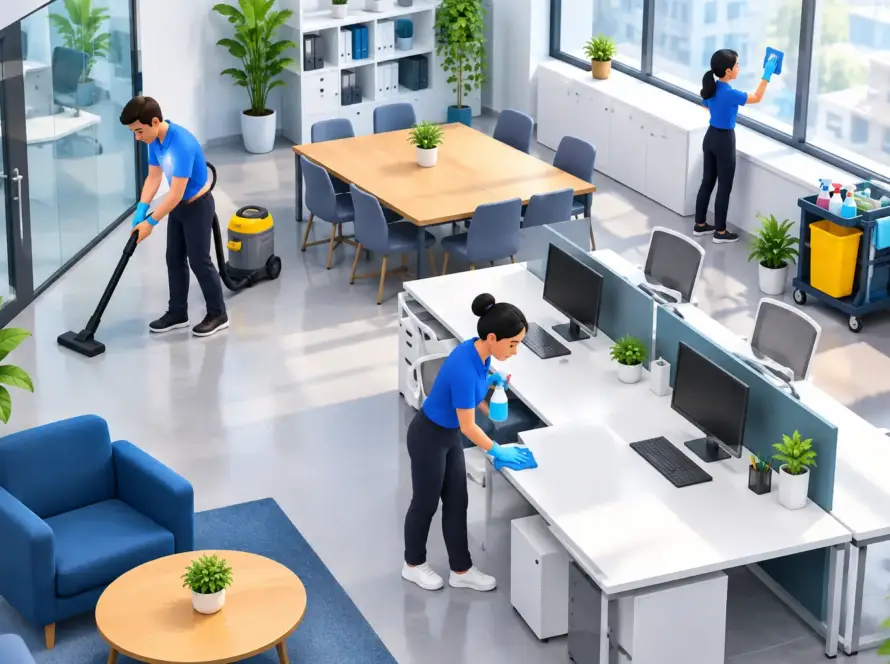
Desk areas may look tidy while shared touchpoints are carrying the greater risk. Door handles, light switches, kitchen appliance handles, boardroom tables, reception counters, elevator buttons, shared keyboards, printers, and washroom fixtures are handled repeatedly by different people throughout the day.
Set a cleaning schedule that reflects how the space is used. A small office with limited visitors may need professional cleaning weekly, paired with simple daily wipe-downs by staff. A busy workplace with shared kitchens, client traffic, or rotating shifts may benefit from daily service and more frequent attention to high-touch points.
Cleaning and disinfecting are related but different tasks. Cleaning removes visible dirt and residue. Disinfecting, when appropriate and completed according to product directions, helps reduce germs on suitable hard surfaces. A professional cleaning provider can build these priorities into a recurring program rather than leaving them to an already busy team.
Keep washrooms and kitchens reliably clean
Washrooms and break rooms shape employee confidence in the entire workplace. When soap dispensers are empty, paper towels run out, bins overflow, or kitchen counters are left uncleaned, staff are less likely to follow good hygiene habits consistently.
Provide soap, running water, paper towels or a suitable hand-drying option, and clearly placed waste bins. In the kitchen, encourage staff to label food, clean spills promptly, and avoid leaving used dishes in the sink. These are small details, but they prevent mess from becoming a shared health concern.
A dependable cleaning routine should also include appliances that are often overlooked, such as microwave handles, fridge doors, coffee stations, and water cooler touchpoints. The right frequency depends on the number of employees and visitors, but consistency matters more than occasional deep cleans.
Improve indoor air where possible
Respiratory illnesses can spread more easily in crowded, poorly ventilated rooms. Review how air moves through your office, especially in boardrooms, lunch rooms, reception areas, and small enclosed workspaces.
Where your building system allows, use fresh-air settings and maintain HVAC filters on schedule. Opening windows can help in suitable weather and where it is safe to do so. Portable air cleaners may also be worth considering for spaces with limited ventilation or frequent meetings.
Ventilation is not a substitute for cleaning or staying home when sick. It is one practical layer of protection. Property managers or HVAC professionals can advise on what is realistic for your building, particularly in multi-tenant offices where controls may be shared.
Make staying home when sick the sensible choice
Employees sometimes come to work ill because they feel pressure to be present, worry about workload, or are unclear about expectations. That can turn one absence into several. A clear, respectful sick-day policy helps protect colleagues and gives managers a consistent way to respond.
Communicate that staff should stay home when they have symptoms that could expose others, particularly fever, vomiting, diarrhoea, or significant respiratory symptoms. Ask them to notify their manager as early as possible and explain how urgent work will be covered. Keep the process simple. Requiring excessive proof for a short illness can discourage people from making the responsible choice.
For roles that can be performed remotely, temporary work-from-home arrangements may reduce disruption during recovery. This will not suit every business or every job. Front-line, site-based, and customer-facing roles may need a stronger cross-training plan instead. The key is to avoid treating attendance as the only sign of commitment.
Train managers to respond consistently
A supportive policy only works if managers apply it well. Supervisors should know how to handle an absence without making an employee feel guilty or pressured to return too soon. They should also be able to recognize patterns that may point to a workplace issue, such as repeated illness after crowded events, poor ventilation, or an inadequately cleaned shared area.
Keep health information private. Managers need enough information to organize coverage and support the employee, not a detailed medical history. This protects trust and helps people report illness sooner.
Plan coverage before illness hits
Unplanned absence is less disruptive when responsibilities are not held by one person alone. Cross-train team members on essential tasks, document routine processes, and maintain a simple handover system for urgent work. For client-facing teams, prepare approved messages and escalation contacts in advance.
This planning reduces the temptation for employees to work while unwell. It also protects service quality when absences happen, because even well-run workplaces will still have them.
Build everyday habits without creating friction
Health-focused workplace reminders should be clear and practical, not alarmist. Place handwashing signs in washrooms, keep sanitizer available near entrances and shared equipment, and make disinfectant wipes accessible for quick clean-ups. Replace supplies before they run out.
Encourage employees to clean their own desk equipment, especially when desks are shared. At the same time, do not make staff responsible for the full hygiene of kitchens, washrooms, or common areas. Those spaces need accountable, scheduled care so standards do not depend on who happens to be available.
Consider the office layout as well. If possible, reduce crowding around printers, coffee stations, and reception desks. Staggered lunch breaks or meeting times can be useful during high-illness seasons, particularly in smaller offices where people share compact spaces.
Review the patterns behind sick days
Track absence trends at an overall level without turning the process into surveillance. Are sick days increasing after large meetings? Does the same area receive repeated cleanliness complaints? Are several employees reporting illness at once? These patterns can help you decide whether to adjust cleaning frequency, improve supplies, review ventilation, or reinforce policy communication.
Avoid assuming every absence is caused by the workplace. Many factors are outside an employer’s control, and employees deserve privacy. The value of tracking is to spot operational improvements, not to question legitimate time away.
For workplaces in Mississauga and the Greater Toronto Area, a recurring office cleaning schedule can provide one dependable part of this plan. Clean and Tidy can tailor daily, weekly, bi-weekly, or customized service around your traffic levels, shared spaces, and business hours, helping keep high-touch and common areas fresh without adding work to your team.
A healthier workplace is built through quiet, repeatable actions: a clean washroom, stocked soap, fresh air, a wiped boardroom table, and a manager who tells an unwell employee to rest without hesitation. When those details are handled consistently, employees can focus on doing good work in a space that feels cared for.