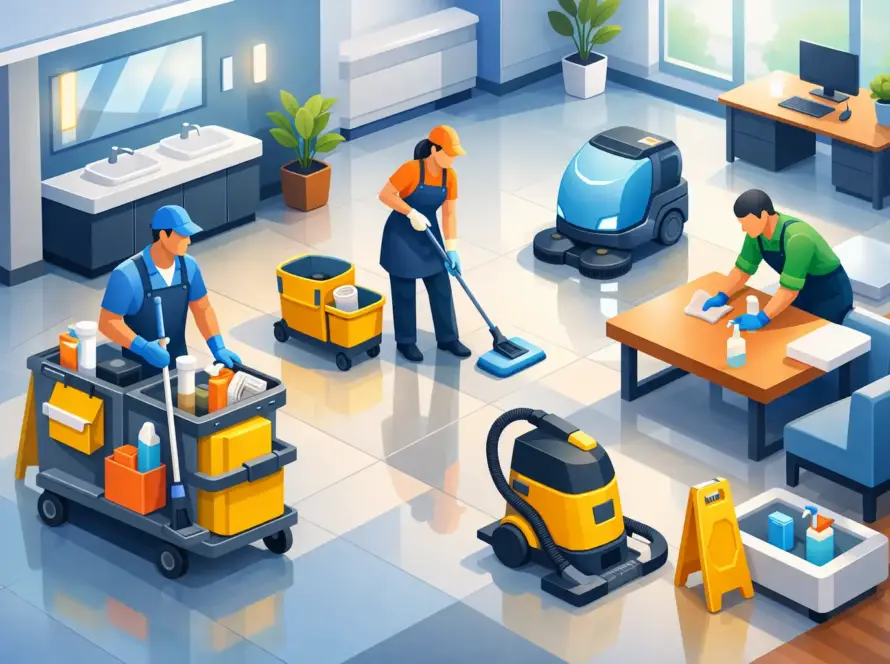
A missed wipe-down on an exam table, an unlabeled disinfectant bottle, or a cleaner using the same cloth in two rooms can create more than an untidy impression. It can undermine infection prevention efforts, staff confidence, and patient trust. This medical clinic cleaning compliance guide helps clinic managers build practical routines that support a clean, safe, and well-documented care environment.
Start with the clinic’s infection prevention requirements
Cleaning compliance in a medical setting is not simply about making surfaces look presentable. The purpose is to reduce the risk of transferring microorganisms between people, rooms, equipment, and high-touch areas. Your cleaning plan should support the infection prevention and control direction that applies to your clinic, including relevant Ontario public health guidance, workplace safety requirements, and the standards set by your professional regulatory body or health network.
Requirements can vary by setting. A family practice, dental clinic, physiotherapy office, diagnostic centre, and walk-in clinic may have different risks, workflows, and cleaning needs. Areas where invasive procedures occur, for example, need more stringent processes than a reception area. A dependable plan begins with understanding those differences rather than applying one generic checklist across the entire site.
Assign one person on the clinic team to own the cleaning program. That person does not need to perform every task, but they should approve schedules, communicate changes, review records, and raise concerns with the cleaning provider. Clear ownership prevents the common problem of staff assuming someone else handled a critical task.
Medical clinic cleaning compliance guide: map every area
Walk through the clinic from the perspective of a patient, a clinician, and a cleaner. Identify what happens in each space, how often it is used, and which surfaces are touched most often. This creates a risk-based cleaning map that is easier to follow and audit.
Reception counters, door hardware, seating arms, payment terminals, washrooms, and shared pens are high-touch surfaces that generally need frequent attention during operating hours. Exam rooms require cleaning between patients where contact with the patient or clinical activity makes it necessary. Floors, baseboards, vents, and low-touch shelving may follow a less frequent schedule, but they should still be included in routine service.
Separate clean areas from contaminated or higher-risk areas in the workflow. Storage rooms for clean supplies should not become a parking spot for used mop heads, waste bags, or chemical bottles. Similarly, a cleaner should not move from a washroom to a treatment room with the same gloves, cloth, or equipment.
A written site plan should identify each room, its required frequency, the approved product or method, and who is responsible. It should also state what changes after a spill, a visibly soiled surface, an outbreak concern, or a procedure that creates additional contamination risk.
Define what happens between patients
Between-patient cleaning is often where compliance breaks down because clinic staff are busy and turnover is fast. Set a simple, workable standard for exam rooms and treatment spaces. It may include disinfecting the exam table and any touched clinical surfaces, replacing paper barriers or linens, removing waste, and restocking hand hygiene supplies.
The right frequency depends on the surface and the care delivered. Not every surface requires disinfection after every patient, but surfaces touched by the patient or provider during care often do. Your clinic’s infection prevention lead should define these expectations so staff are not left to guess.
Use products correctly, not just frequently
A product can only do its job when it is approved for its intended use and applied according to its label. Cleaning removes dirt and organic material. Disinfection uses an appropriate product to reduce microorganisms on a pre-cleaned surface. In many cases, both steps matter.
Confirm that disinfectants are suitable for the surfaces being treated and are used at the correct concentration and contact time. Contact time is the period a surface must remain visibly wet for the product to be effective. Wiping it dry too quickly can mean the surface was never properly disinfected.
Keep Safety Data Sheets accessible and ensure workers understand Workplace Hazardous Materials Information System requirements. Chemicals should remain in their original labelled containers whenever possible. If a product is transferred to another container, it needs workplace labelling in accordance with your safety procedures. Do not mix products unless the manufacturer explicitly directs it.
Product selection also involves trade-offs. Stronger is not always better. Some chemicals can damage upholstery, flooring, electronics, or sensitive medical equipment. Fragrance-heavy products may also be unsuitable for patients and staff with sensitivities. An eco-friendly option can be a good fit in administrative areas, provided it meets the clinic’s cleaning and disinfection needs where applicable.
Train for technique, safety, and privacy
A cleaning schedule is only useful when the people carrying it out know the correct technique. Training should cover hand hygiene, glove use, safe chemical handling, waste procedures, colour-coded cloths or other separation systems, and the direction of cleaning from cleaner areas to dirtier ones.
Staff also need to understand when to stop and report an issue. Blood or body fluid spills, sharps, damaged waste containers, pest activity, mould, and unknown substances should follow a defined escalation process. Do not expect general cleaners to manage a situation beyond their training or the agreed service scope.
Privacy deserves equal attention. Cleaners may work around appointment sheets, computer monitors, patient charts, labels, and conversations at the front desk. They should be instructed not to read, move, photograph, or discuss patient information. Secure records before cleaning begins, and give the cleaning team a clear process for reporting found documents or unattended devices.
For clinics using an outside provider, ask about worker training, insurance, supervision, background screening where appropriate, and how replacements are briefed on your site. A low-cost service can become expensive if inconsistent staffing leads to missed procedures or repeated retraining.
Build records that prove the work was done
Documentation turns a cleaning routine into a manageable compliance program. It helps managers spot gaps, supports internal reviews, and provides evidence of due diligence when concerns arise.
Keep records proportionate to the risk and size of your clinic. Daily logs may be appropriate for washrooms, reception touchpoints, and scheduled cleaning tasks. Between-patient tasks can be documented through a room turnover process where needed. Record the date, time, area, task, and initials or name of the person completing it.
A useful log also has room for exceptions. If a room was unavailable, a product was out of stock, or an extra clean was needed after an incident, note what happened and how it was resolved. Blank checkboxes are not a quality system. Honest records allow you to correct problems before they become patterns.
Review logs regularly rather than storing them away. A short monthly review can reveal recurring supply shortages, rooms that are frequently missed, or tasks that do not fit the actual pace of the clinic. Adjusting the plan is a sign of a healthy program, not a failure.
Coordinate staff and your cleaning partner
Compliance works best when responsibilities are specific. Clinical staff may be responsible for cleaning items used directly in patient care and preparing rooms between appointments. A professional cleaning team may handle scheduled washroom cleaning, floors, common spaces, waste removal within scope, dust control, and detailed after-hours service. The exact division should be written down.
Discuss timing as carefully as task lists. A clinic that sees patients until late afternoon may need touchpoint service during the day and detailed cleaning after close. A smaller office may be well served by evening cleaning several times a week plus a staff-led process for room turnover. The right schedule depends on patient volume, services offered, room use, and your clinic’s risk assessment.
For Mississauga and Greater Toronto Area clinics, a recurring professional cleaning arrangement can provide consistency when it includes a site-specific checklist, trained and insured staff, and a reliable reporting process. Clean and Tidy can help commercial clients create a customized schedule that supports a fresh, professional workplace without adding unnecessary disruption to the workday.
Check the program before a complaint forces the issue
Walk the clinic regularly with the checklist in hand. Look beyond whether floors shine. Check whether hand hygiene stations are stocked, waste bins are appropriate and not overflowing, products are labelled, cleaning tools are maintained, and high-touch surfaces are receiving the attention promised in the schedule.
Ask front-desk and clinical staff where the process slows them down. Their feedback often identifies the practical barriers: a supply closet that is too far away, unclear responsibility after a late appointment, or a cleaning time that conflicts with charting. Small operational changes can make compliance far easier to sustain.
A clean clinic should feel calm and cared for to every person who walks in. When routines are clear, staff are trained, and records match the work being done, cleanliness becomes dependable support for safe care rather than another item on an already crowded to-do list.