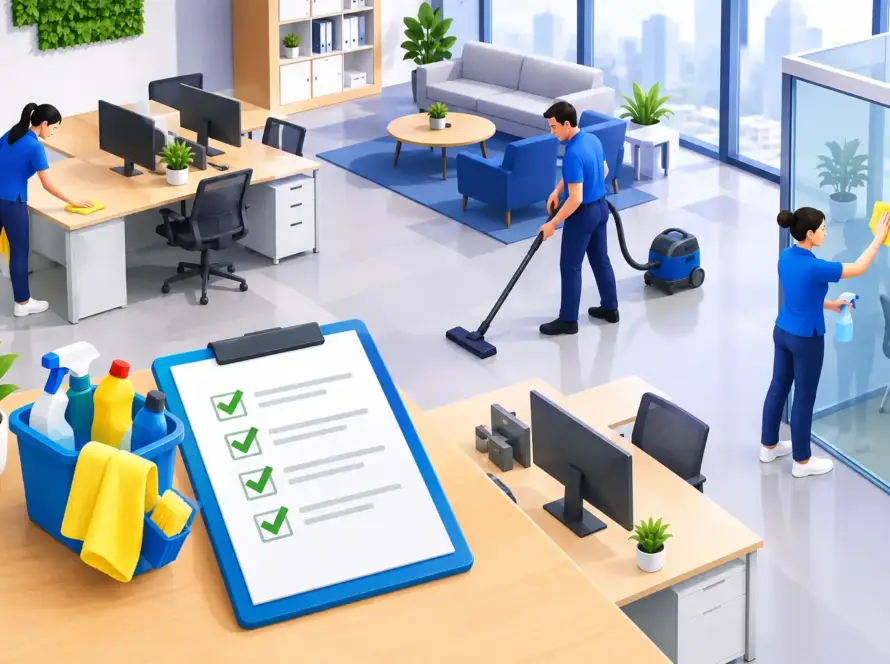
A clean office is rarely noticed when it is done well. Desks feel ready for the day, washrooms stay pleasant, floors look cared for, and employees can focus without wondering who will handle the next spill or overflowing bin. Recurring office cleaning gives your workplace that dependable baseline – not as a one-time reset, but as ongoing operational support.
For offices across Mississauga and the Greater Toronto Area, the right cleaning schedule protects more than appearances. It helps create a professional environment for staff, clients, tenants, and visitors while reducing the pressure on your internal team to manage everyday cleaning tasks.
Why Recurring Office Cleaning Is a Practical Business Decision
Office cleaning is often treated as something to arrange once the workplace starts looking untidy. By that point, dust has built up in corners, fingerprints are visible on glass, washroom supplies may be low, and shared kitchen areas can become a source of frustration. A recurring plan prevents those small issues from becoming visible problems.
Consistency also matters to how people experience your business. Clients form impressions quickly when they enter a reception area, meeting room, showroom, or washroom. Employees notice, too. A fresh, orderly workplace signals that the business takes its people, space, and standards seriously.
The value is not simply a spotless floor or empty garbage bin. It is the confidence that cleaning will be handled reliably, on an agreed schedule, without repeated follow-ups. That makes recurring service particularly useful for office managers, property managers, business owners, and administrators with many competing responsibilities.
Choosing the Right Office Cleaning Schedule
There is no single cleaning frequency that suits every workplace. The best schedule depends on foot traffic, office size, the number of shared spaces, business hours, and the kind of work taking place in the building.
Daily cleaning for busy shared spaces
Daily service is often the right fit for high-traffic offices, medical or professional settings, coworking areas, retail-adjacent workplaces, and buildings with busy washrooms or kitchens. Regular attention keeps common areas presentable and helps prevent odours, clutter, and surface grime from building up between workdays.
A daily plan can include waste removal, washroom cleaning and restocking, kitchen and break room care, vacuuming or mopping, disinfecting high-touch surfaces, and tidying entrances and reception areas. The exact scope should reflect how the space is actually used rather than relying on a generic checklist.
Weekly cleaning for established offices
Weekly office cleaning works well for smaller teams, professional offices with moderate traffic, and spaces where employees work primarily at individual desks. It keeps the workplace maintained without over-servicing areas that stay relatively clean throughout the week.
For many businesses, weekly service covers the essentials: floors, washrooms, kitchen surfaces, garbage and recycling, dusting, glass touch-ups, and shared touchpoints. A good provider can also rotate deeper-detail tasks so the office receives thorough care over time.
Bi-weekly or monthly service for lower-traffic spaces
Bi-weekly or monthly cleaning may be appropriate for offices that are only occupied part-time, private studios, small administrative spaces, or locations with limited staff and client visits. It can be a practical option, but it needs honest assessment. If a kitchen, washroom, or entrance is used heavily, a less frequent full clean may need to be paired with more regular touch-up service.
The goal is not to choose the lowest frequency possible. It is to choose a schedule that keeps the workplace consistently comfortable and presentable without paying for work the space does not need.
What a Reliable Cleaning Plan Should Cover
A recurring cleaning plan should be clear enough that everyone knows what to expect. The routine may differ by office, but the service should address the areas employees and visitors rely on every day.
In most workplaces, this includes reception spaces, work areas, meeting rooms, washrooms, kitchens or break rooms, hallways, and entry points. Attention to high-touch surfaces is especially important in shared environments, including door handles, light switches, tables, appliance handles, and washroom fixtures.
Floors deserve more than a quick pass. Vacuuming, mopping, spot treatment, and entryway care all affect how clean an office looks and feels. In Canadian seasons, entrances can require extra attention as rain, salt, slush, and debris are carried inside.
It is also worth discussing the details that are easy to overlook. Are garbage and recycling handled in the way your building requires? Are washroom consumables restocked? Should cleaners work around sensitive equipment, confidential documents, or particular staff schedules? These conversations help prevent gaps in service.
Flexibility Matters as Your Office Changes
A cleaning arrangement should support the way your business operates, not force your team to work around it. A quiet office may need service after hours. A clinic or customer-facing business may need cleaning completed before opening. A growing company may need more frequent visits as headcount and foot traffic increase.
Seasonal changes can also affect your requirements. Winter may call for additional floor care and entryway maintenance, while flu season may lead to greater focus on high-touch surfaces. After a company event, renovation, move, or busy period, a one-time detailed clean can be added to an ongoing program.
This is why customized plans are often more useful than fixed packages. A dependable cleaning partner should be able to adjust the schedule and scope when your workplace changes, while maintaining the same standard of care.
What to Look for in an Office Cleaning Provider
Price matters, but the least expensive quote is not always the best value. Office cleaning is a recurring relationship, and reliability has a direct impact on your staff, clients, and daily operations.
Look for trained, insured professionals who understand commercial environments and follow a consistent process. Insurance provides reassurance when a cleaning team is working in your space, while training helps ensure that tasks are completed carefully and appropriately.
Communication is equally important. You should be able to explain your priorities, identify areas that need extra attention, and receive a clear response when needs change. A provider that offers a satisfaction guarantee demonstrates accountability rather than treating each visit as a simple transaction.
Product preferences should also be part of the discussion. Eco-friendly options may be important for businesses with sustainability goals, while pet-friendly products can be useful in offices that welcome animals. The right products depend on the workplace, surfaces, sensitivities, and cleaning requirements.
Make Cleanliness Easy to Maintain Between Visits
Professional cleaning has the strongest effect when the office has simple habits that support it. This does not mean asking employees to take on janitorial duties. It means creating practical routines, such as clearing dishes from the kitchen, keeping walkways free of boxes, and ensuring confidential paperwork is put away before service.
Designating clear locations for recycling, supplies, and personal items can also make cleaning more efficient. When cleaners can access floors, surfaces, and shared spaces safely, they can spend their time improving the workplace rather than working around avoidable obstacles.
For managers, keeping a brief list of recurring concerns can be helpful. Perhaps the boardroom needs extra attention after client meetings, the front entrance becomes messy in wet weather, or one washroom sees more traffic than the others. Sharing these observations allows the cleaning plan to remain responsive.
A Cleaner Office Supports Better Workdays
Recurring office cleaning is not about chasing perfection. It is about creating a workplace that feels consistently cared for, where employees can settle in, visitors feel welcomed, and managers are not left solving preventable cleaning issues.
Clean and Tidy provides customizable recurring cleaning programs designed around real workplace needs, with trained and insured professionals and a commitment to customer satisfaction. Whether your office needs daily care, weekly maintenance, or a flexible schedule that evolves with your team, the right plan should make cleanliness one less thing to manage.
A well-maintained office sends a quiet but clear message every day: this is a professional space, people are looked after here, and the details matter.