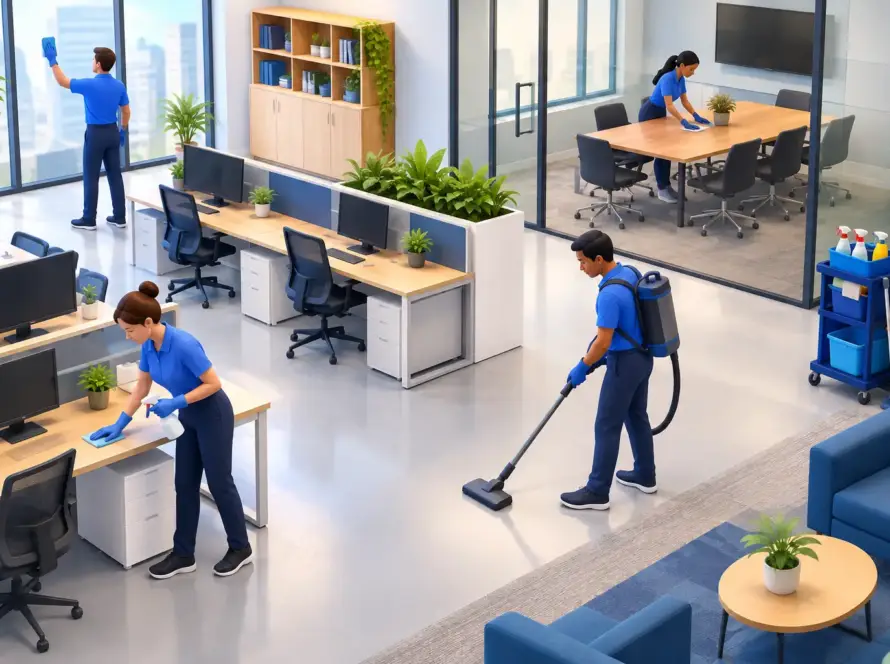
A workstation can look perfectly orderly at 9 a.m. and still carry the residue of dozens of shared touches from the day before. When office managers ask what office areas spread germs, the answer is rarely one obvious surface. Germs move through the workplace wherever hands, shared equipment, food, moisture, and busy routines meet.
For offices across Mississauga and the Greater Toronto Area, the practical goal is not to create an unrealistic sterile environment. It is to reduce the buildup on the surfaces employees and visitors touch most, support a fresher workplace, and make regular cleaning dependable rather than another item on an internal to-do list.
What office areas spread germs most easily?
High-touch areas deserve the closest attention because they create the most opportunities for transfer from one person to the next. A surface does not need to look dirty to require cleaning. In fact, the places people overlook most often are usually the ones used repeatedly throughout the workday.
Door handles, elevator buttons, and entry points
The office entrance sets the pattern for the rest of the day. Exterior and interior door handles, push plates, security keypads, elevator buttons, reception counters, and sign-in screens are touched by employees, clients, couriers, and building staff. They are also commonly missed during a quick end-of-day tidy.
These areas benefit from frequent attention, especially in offices with a steady flow of visitors or shared access between suites. Cleaning teams should use products appropriate for the material and follow the product’s required contact time. A fast wipe may remove fingerprints, but proper disinfection depends on using the product as directed.
Shared desks and workstations
Desks can become personal spaces, but many office surfaces are not used by just one person. Hot desks, meeting-room tables, computer mice, keyboards, desk phones, chair arms, and monitor controls may pass between several users in a week or even in a single day.
The trade-off here is practical. Cleaning every individual desk daily can be disruptive or unnecessary in a low-traffic, assigned-seat office. Shared stations, however, should be part of a consistent cleaning plan. Providing employees with simple desk-cleaning supplies also helps between scheduled visits, particularly when people rotate through workspaces.
Break rooms and kitchen touchpoints
The break room is often the busiest shared space in an office and one of the easiest places for grime to build up. Refrigerator handles, microwave buttons, coffee machine controls, kettle handles, sink taps, cupboard pulls, tables, and condiment containers all receive repeated contact. Food crumbs and spills add another concern, as they can attract pests and leave the space feeling neglected.
A clean kitchen supports more than hygiene. It gives employees a comfortable place to take a break and signals that the workplace is cared for. For many offices, daily attention to kitchen surfaces and waste is worthwhile, while deeper appliance and cabinet cleaning can be scheduled weekly or monthly based on usage.
Washrooms and their surrounding surfaces
Washrooms naturally require detailed, routine cleaning because they combine moisture, frequent contact, and multiple users. Tap handles, flush levers or buttons, stall locks, soap dispensers, paper towel dispensers, door handles, and baby-change stations should all be addressed, not just the visible fixtures.
The area immediately outside the washroom matters too. Nearby door handles, light switches, and shared hallway surfaces may be touched after handwashing. A professional cleaning routine considers the full traffic path, not only what is inside the washroom door.
Meeting rooms and collaboration zones
Meeting rooms can appear clean between appointments because they are used in short bursts. Yet they collect contact on table edges, chair arms, presentation remotes, video-conferencing controls, whiteboard markers, light switches, and shared pens. If clients use these rooms, their condition also affects the impression your business makes.
A quick reset after major meetings helps, but recurring professional cleaning keeps these spaces consistently ready. This is particularly useful for offices that host client presentations, interviews, training sessions, or hybrid meetings throughout the week.
The overlooked office surfaces that need attention
Some germ-prone surfaces are not obvious because employees do not think of them as shared. They still contribute to the overall cleanliness of the office when they are left out of the routine.
Consider light switches, printer buttons, copier lids, water cooler taps, vending machine controls, railing surfaces, locker handles, coat-room hooks, and communal office supplies. Mobile devices and personal keyboards can also carry residue, although employees are generally best positioned to clean their own electronics safely.
Waste and recycling areas deserve careful handling as well. Bin lids, recycling stations, and bottle-return areas see regular contact and may contain food packaging or spilled liquids. Emptying bins is essential, but wiping and disinfecting the surrounding touchpoints keeps the area from becoming a source of odour or visible mess.
Why a visible clean is not enough
Vacuumed carpets, empty bins, and polished counters make an office look professional. Those tasks matter, but appearance alone does not address every high-touch risk. A reliable workplace cleaning plan separates general cleaning from targeted disinfection, then applies each where it makes sense.
Cleaning removes dust, soil, crumbs, and surface buildup. Disinfecting is used on appropriate hard, non-porous high-touch surfaces to reduce germs. Using too much disinfectant everywhere is not necessarily better. It can create residue, affect certain materials, and add unnecessary cost. The right approach focuses on frequency, touch patterns, occupancy, and the type of workplace.
For example, a small professional office with assigned desks may need weekly detailed cleaning plus attention to the washroom and kitchen. A busy clinic-adjacent office, sales centre, shared workspace, or client-facing reception may need daily service and more frequent touchpoint cleaning. There is no one schedule that fits every workplace.
Build a cleaning schedule around how your office operates
The most effective office cleaning schedule follows real behaviour, not a generic checklist. Start by looking at how many people use the space, whether desks are shared, how often clients visit, where people eat, and which rooms are used after regular hours.
Daily cleaning is often a strong fit for high-traffic offices, customer-facing businesses, and workplaces with active kitchens and washrooms. It keeps reception, floors, waste, touchpoints, and common areas consistently presentable. Weekly service may suit smaller offices with lower foot traffic, while bi-weekly or customized schedules can work where occupancy is limited.
A good service plan should also account for seasonal changes. During cold and wet Ontario months, entrance floors and mats need more attention. During cold and flu season, offices may choose added focus on shared touchpoints. After an event, training day, or busy client week, an extra visit can restore the space quickly without changing the entire recurring schedule.
Help employees support a cleaner workplace
Professional cleaning works best when employees have simple habits that protect the space between visits. This does not mean asking staff to take on janitorial duties. It means making it easy to do the small things that prevent avoidable buildup.
Encourage people to clear food from desks, rinse dishes after use, report spills promptly, and wipe shared equipment when appropriate. Keep hand soap, paper towels, and waste bins stocked and accessible. If a meeting room is shared heavily, place suitable wipes nearby so users can reset the table and controls after use.
Clear ownership is helpful. When no one knows who is responsible for the kitchen counter, printer station, or refrigerator cleanout, those tasks tend to wait. A professional cleaning provider can manage the recurring work, while a short office policy can clarify what staff should handle during the day.
A dependable standard for recurring office cleaning
The difference between occasional tidying and reliable office cleaning is consistency. Your team should know that the washrooms will be refreshed, common touchpoints will be addressed, floors will be maintained, and shared spaces will be ready for work without needing repeated follow-up.
Clean and Tidy creates customized recurring office cleaning programs that reflect each workplace’s traffic, layout, and schedule. Trained, insured professionals can provide the dependable support that helps keep offices fresh, professional, and easier to manage, with eco-friendly options available on request.
A clean office is not about worrying over every surface. It is about giving people a workplace that feels cared for from the front door to the break room. When regular cleaning is built around the areas people actually use, employees can focus on their work and visitors can focus on why they came.