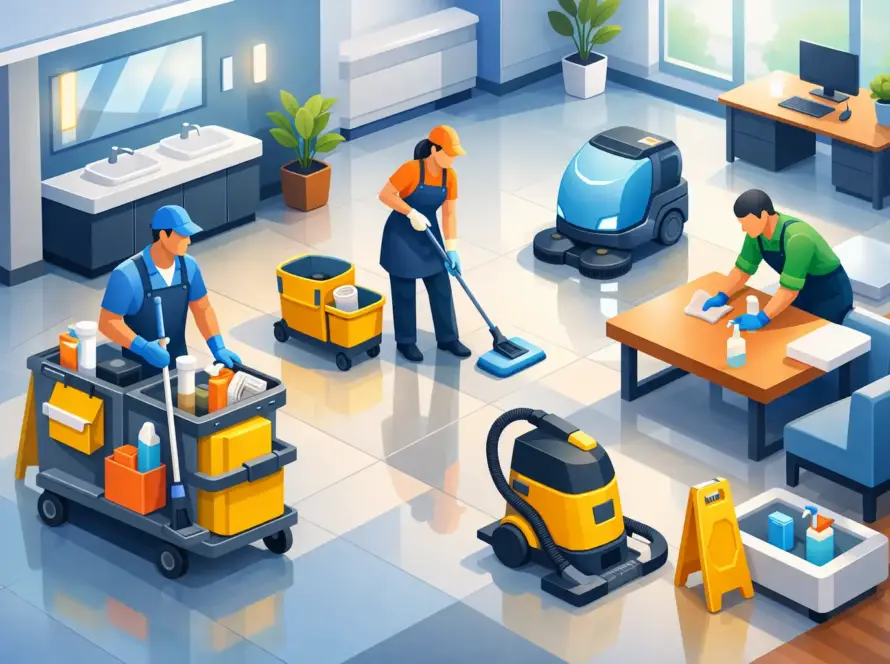
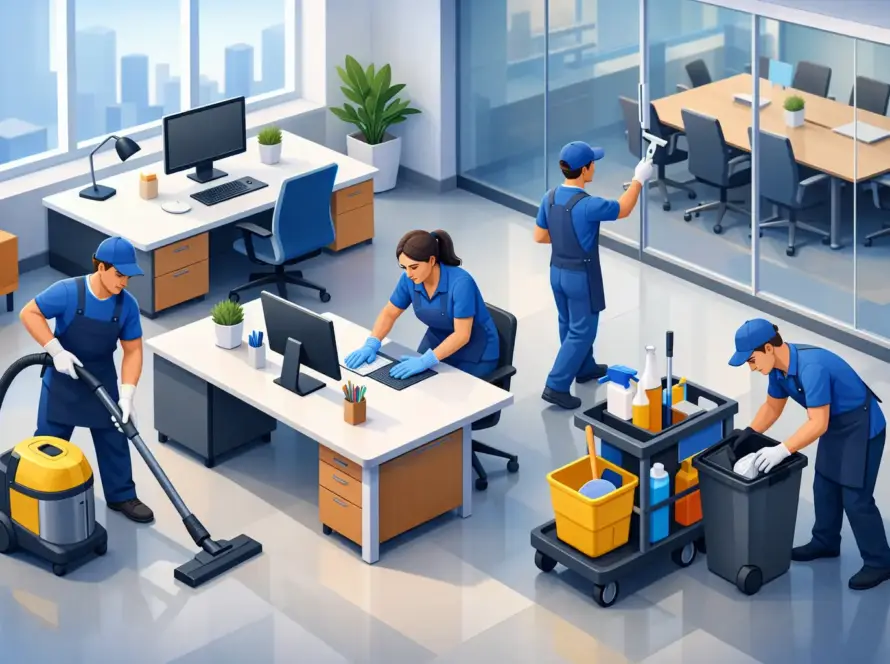
The condition of an office is noticed long before anyone comments on it. A marked boardroom table, fingerprints on glass doors, or a neglected break room can make employees and visitors question how the rest of the workplace is managed. Consistent office sanitization helps prevent that concern by supporting a cleaner, fresher, more professional environment every day.
For office managers and business operators, sanitization is not a one-time response to cold and flu season. It is part of maintaining a workplace people feel comfortable using. The right routine reduces attention on the mess, supports staff confidence, and allows your team to focus on work instead of wondering who will clean the shared kitchen.
What Office Sanitization Actually Includes
Office cleaning and office sanitization work together, but they are not the same task. Cleaning removes visible dust, dirt, crumbs, and spills from surfaces. Sanitizing focuses on reducing germs on frequently touched areas after they have been properly cleaned. If a surface is visibly soiled, applying a sanitizing product alone is not enough to produce a dependable result.
A professional routine should begin with the practical work that keeps an office orderly: emptying waste, wiping surfaces, vacuuming or mopping floors, and refreshing washrooms and kitchens. Sanitization is then applied where it has the greatest value, especially on shared, high-contact surfaces.
The priority areas usually include:
- Door handles, push plates, light switches, elevator buttons, and reception counters
- Desks, shared workstations, keyboards, mice, phones, and meeting room controls
- Kitchen counters, appliance handles, taps, cabinet pulls, and dining tables
- Washroom fixtures, dispensers, stall locks, and common touchpoints
The exact scope depends on the size of the office, how many people use it, and how the space functions. A quiet professional office with assigned desks has different needs than a busy clinic, showroom, coworking space, or customer-facing reception area.
Why Regular Office Sanitization Supports Better Operations
A clean workplace does more than look presentable. It sets an operational standard. When common areas are cared for consistently, employees are more likely to treat the space responsibly, clients are welcomed into a professional setting, and office managers spend less time responding to last-minute cleaning issues.
Regular sanitization also supports confidence in shared spaces. Employees may be comfortable working at their own desk but hesitant to use a crowded lunchroom, book a boardroom, or touch a communal printer if those areas appear neglected. A visibly clean and well-maintained office helps remove that friction.
For client-facing businesses in Mississauga and across the Greater Toronto Area, the impression can be immediate. Visitors may never see your internal processes, but they will see your entrance, waiting area, washroom, and meeting room. These spaces quietly communicate whether your business is organized, attentive, and ready to serve.
There is also a practical benefit to consistency. When cleaning is scheduled, small issues are addressed before they become bigger disruptions. Overflowing bins, odours in kitchen areas, stained carpets, and neglected washrooms are easier to manage through regular service than through an urgent call after a problem has grown.
How Often Should an Office Be Sanitized?
There is no single schedule that fits every workplace. The best frequency depends on foot traffic, shared amenities, visitor volume, the number of employees on site, and the type of work being done. A small office with limited daily traffic may be well served by weekly or bi-weekly cleaning with focused sanitization of key touchpoints. A busy workplace with shared kitchens, washrooms, and reception areas may need daily attention.
Daily service is often a practical choice for offices with high employee attendance, frequent visitors, multiple washrooms, or active lunchrooms. It keeps common areas consistently presentable and prevents debris and spills from carrying over from one day to the next.
Weekly service can work well for smaller offices or hybrid teams with fewer people on site. The important consideration is whether high-touch areas remain clean between appointments. In some cases, a weekly professional service paired with simple employee habits, such as wiping down personal workstations and cleaning up after meals, is enough.
Monthly cleaning is generally better suited to low-traffic spaces or as a deeper supplement to an existing in-house routine. It may not be sufficient as the only cleaning plan for an office used by staff and clients every weekday. A reliable cleaning provider can help assess the space and recommend a schedule based on real use rather than a generic package.
Pay Closer Attention to Shared Spaces
Not every square metre requires the same level of attention. Private offices may need routine dusting, vacuuming, and surface cleaning, while shared spaces require more frequent care. Kitchens, washrooms, reception desks, meeting rooms, and printer stations tend to collect the most traffic and the most visible signs of use.
This is where a customized plan is useful. Rather than paying for unnecessary work in low-use areas, your service can prioritize the places that shape employee comfort and visitor impressions. The goal is not to over-clean for the sake of it. The goal is to keep the office consistently clean where it matters most.
Choosing Products and Practices That Fit Your Workplace
Sanitization should be effective without creating unnecessary disruption. Strong chemical odours, residue on desks, or products that are unsuitable for sensitive environments can affect how employees experience the office. Product selection matters, particularly in workplaces with pets, staff sensitivities, food preparation areas, or sustainability preferences.
Eco-friendly and pet-friendly product options can be requested when they suit the workplace. However, it is worth discussing the trade-off openly: the right product and method depend on the surface, the level of soil, and the sanitization required. A professional cleaner should choose appropriate products, follow label directions, and allow the required contact time rather than rushing through a quick spray-and-wipe routine.
Good service also protects the office itself. Electronics, wood finishes, glass partitions, flooring, and upholstered furniture need proper treatment. Using the wrong product on a monitor, desk finish, or carpet can create damage that costs far more than routine cleaning. Trained cleaning professionals understand how to work carefully around office equipment and finishes while still producing a thorough result.
What to Expect From a Professional Sanitization Plan
A dependable office cleaning program should feel straightforward. You should know what is being cleaned, how often the team will attend, and who to contact if your needs change. Flexibility matters because offices change: teams grow, schedules shift, events bring in extra visitors, and seasonal conditions can increase the need for attention.
Look for a provider that can offer daily, weekly, bi-weekly, or customized cleaning plans rather than forcing every office into the same checklist. Insured, trained professionals are equally important. Your cleaning team works around confidential materials, valuable equipment, and the spaces your staff rely on, so trust and consistency are essential.
Clean and Tidy builds recurring office cleaning programs around the needs of each workplace, with detail-oriented service and a 100% satisfaction guarantee. Whether your priority is a polished reception area, fresher washrooms, a cleaner break room, or reliable after-hours care, a clear plan makes the process easier to manage.
Simple Habits That Keep Results Lasting
Professional service works best when the workplace supports it between visits. This does not mean asking employees to take on a cleaning crew’s responsibilities. It means setting clear expectations for shared spaces: wipe up spills promptly, remove food from desks, place waste in bins, and leave meeting rooms ready for the next group.
Office managers can also make sanitization easier by keeping cleaning access clear. If desks, kitchen counters, and washroom areas are blocked by excessive clutter, even a skilled cleaner cannot reach every surface efficiently. Small daily habits help the scheduled service deliver a more complete result.
A well-sanitized office is not about making a workplace feel clinical. It is about giving employees and visitors a clean, comfortable space that reflects the care behind your business. When the routine is reliable, the office simply feels ready for the day ahead.